
An Alpine railway built across national borders
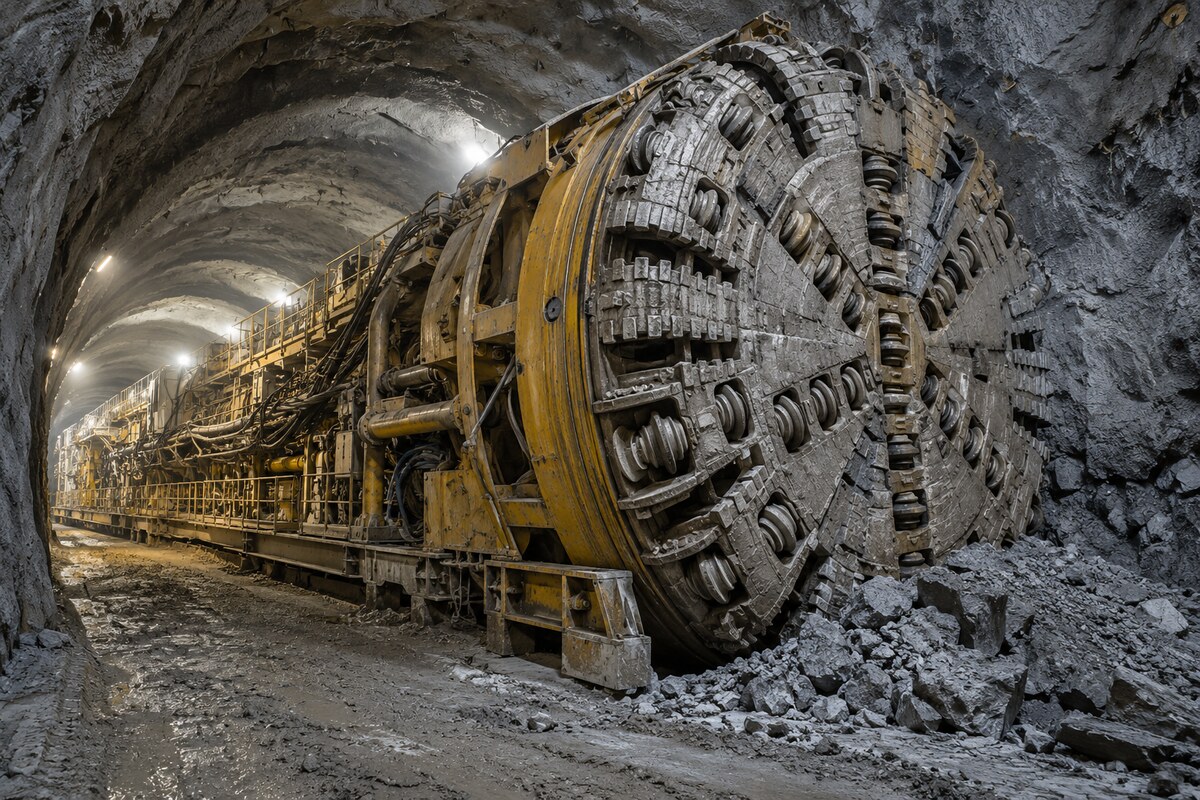
The Brenner Base Tunnel links construction sites in Austria and Italy beneath the Alps. Steinach am Brenner, in Tyrol, is one of its principal works locations. Project manager Sebastian Reimann described the undertaking as a joint European effort. His colleague Andreas Ambrosi told Euronews that people from eleven European nations worked there and that Herrenknecht had supplied eight tunnelling machines. Those statements describe the industrial cooperation behind the project; individual machines have different dimensions and construction assignments.
Herrenknecht employs around 5,000 people worldwide and has annual turnover exceeding EUR 1 billion. Founder Martin Herrenknecht advocated European preference in public procurement and protective tariffs in his Euronews interview. His comparisons of European and Chinese wages and steel prices were arguments for those policies, rather than audited cost data for this tunnel.
Separate bores and a longer underground connection
The exploratory tunnel broke through beneath the national border on September 18, 2025, approximately 1,400 metres below the Brenner Pass. A chisel excavator opened the final wall between the Austrian H53 Pfons-Brenner and Italian H61 Mules sections. This bore runs centrally beneath the two main railway tunnels, around 10–12 metres lower. It provides advance geological information during construction and is intended for drainage and maintenance once the railway operates. Trains will use the main bores rather than the exploratory passage.

The opposing drives approached through the Wolf and Mules access tunnels. BBT SE gave a single-digit-centimetre surveying deviation over approximately 29 kilometres. The future 64-kilometre underground railway connection incorporates part of the existing Inn valley bypass south of Innsbruck. That bypass opened in May 1994 and is 12.7 kilometres long in total. Only part joins the new through route: its complete length should not be added again to the stated 64 kilometres.
Counting the excavation network
The wider construction system contains roughly 230 kilometres of bores when main tunnels, exploratory works and other underground passages are added together. This aggregate measures multiple excavated structures, rather than the distance a train will travel beneath the mountains. On July 9, 2025, excavation had reached 200 kilometres, or approximately 87 per cent of that system. The first 100 kilometres had been celebrated in May 2019, just over six years before this subsequent construction milestone.
The July total comprised 96 kilometres of main tunnel, 57 kilometres of exploratory tunnel and 47 kilometres of other passages, including safety, logistics and bypass works. At that point, the H71 Isarco River Underpass, H52 Hochstegen and H21 Sill Gorge lots had been completed. Austrian excavation towards the border was still proceeding by drilling and blasting. These are dated construction quantities; they describe the July 2025 position and do not imply that 87 per cent of the finished railway equipment was installed.
Rock, river crossings and existing infrastructure
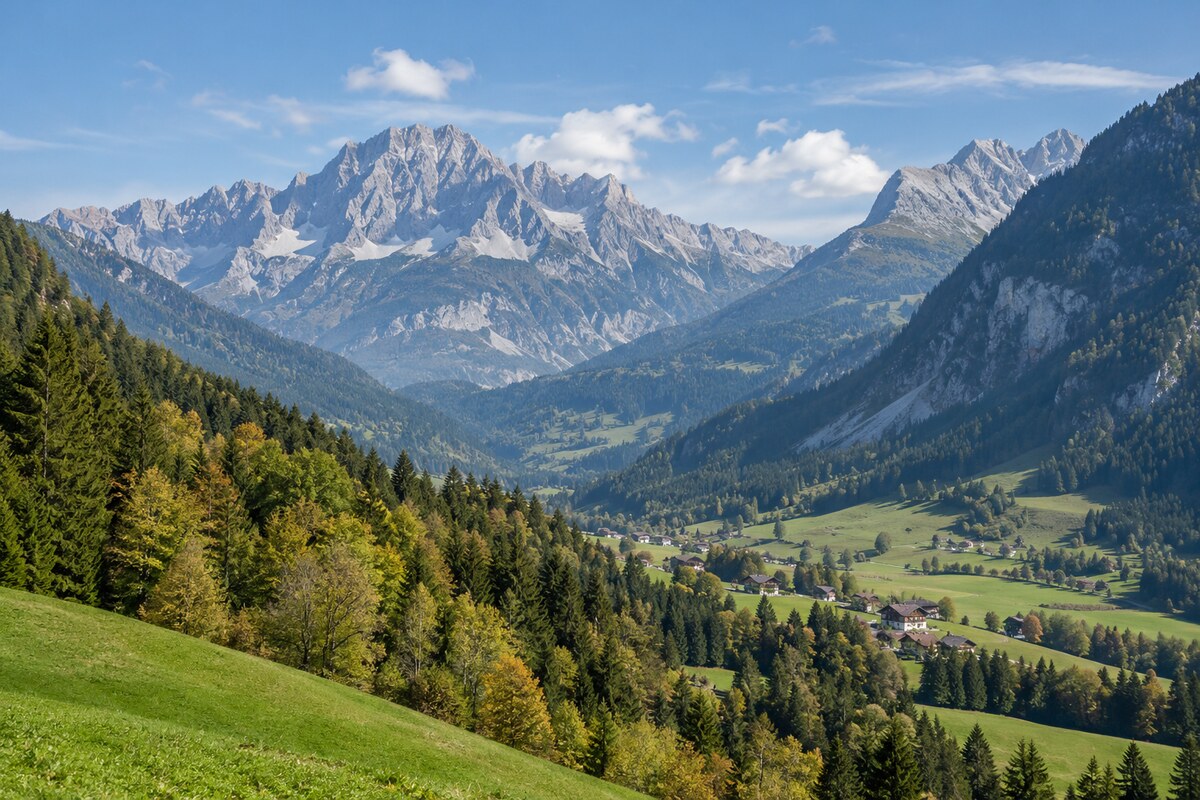
Hochstegen and the Isarco River Underpass involved markedly different ground conditions. At Hochstegen, a difficult geological section extended for approximately 500 metres, with Triassic rocks to the north and water-bearing carbonate layers to the south. Michael Knapp and Matthias Hofmann led the team working on the H52 lot. The H52 team spent 23 months working approximately 1,000 metres below ground on this construction lot. Both H52 and H71 had been completed before Christmas 2023, preceding the later breakthroughs elsewhere in the tunnel network.
The Isarco underpass lies in a narrow valley near Fortezza. Its route passes beneath the A22 motorway, the SS12 state road and the Isarco river. Ground conditions range from Brixner granite to soft alluvial deposits containing large granite boulders. Project manager Michele Ianeselli identified these contrasts among the principal engineering challenges. BBT SE stated that excavation had proceeded without interrupting the transport infrastructure or the river’s natural flow. Those operational claims belong to the project company’s account of the completed works.
Why excavation stopped at the border
Flavia travelled northwards from Mules through the Italian west main tunnel and stopped at the national boundary. The stopping point followed the division of construction contracts. Italian and Austrian stretches were awarded under their respective national procurement laws to different consortia, even though the finished railway forms a continuous international connection. The machine therefore completed an assigned section rather than continuing into a neighbouring contractor’s works. Its arrival at the border did not mean that excavation from the Austrian side had already met it.

In the Austrian H53 Pfons-Brenner lot, the corresponding approach to the border used drilling and blasting. The exploratory and east main tunnels followed the same division between national construction stretches. Serena had reached the border in the exploratory bore on November 24, 2021. During May 2025, a little over 400 metres remained on the Austrian exploratory approach. That remaining distance was a snapshot before the September connection, rather than a permanent gap between the two countries’ completed underground works.
Flavia finishes the Italian mechanised drive
Flavia completed its west main tunnel excavation on May 2, 2025, in the H61 Mules 2–3 lot. Italian, Austrian and European representatives attended the celebration on May 16. The completion and ceremony were separate events, two weeks apart. Flavia was the last tunnel boring machine to finish on the Italian side. Its arrival followed Serena’s exploratory-tunnel milestone in November 2021 and the east main tunnel machine Virginia’s arrival at the Brenner Pass in March 2023.
The three Italian machines excavated nearly 43 kilometres between them. Their work covered distinct bores, so that total does not describe a single railway track’s length. Planners, engineers, geologists and machine operators contributed to the excavation programme. BBT SE executives Gilberto Cardola and Martin Gradnitzer thanked those teams at the ceremony. Gerhard Harer, ÖBB’s director of global coordination for the project, identified railway outfitting as the next challenge: the end of a mechanised drive still leaves work before a functioning railway can carry traffic.

Blasting a connection towards Innsbruck
A further breakthrough joined the Austrian H41 Sill Gorge-Pfons and H21 Sill Gorge lots on May 20, 2025. In the west main tunnel, miners had advanced approximately 3.4 kilometres northwards towards Innsbruck using drilling and blasting. This method involves drilling holes, loading them with explosives and firing the charges to excavate the rock. The drive passed through the Viller Berg mountain at depths reaching approximately 400 metres. Its connection joined previously separate underground construction stretches in the northern part of the scheme.
The joined works formed an uninterrupted stretch of approximately 14 kilometres. Across the east and west main tunnels, the blast-excavated sections towards the Sill Gorge totalled about 5.8 kilometres. Their completion brought that particular main-tunnel excavation programme to an end. Shorter connecting passages between the main tunnels and exploratory bore remained among the works to be carried out by conventional methods. Romed Insam managed the H41 lot for BBT SE, while Harald Goldberger represented its construction consortium at the milestone.
Lining and connections at Trens
By April 11, 2025, workers had completed the final lining at the Trens emergency stop within the Mules construction area, including installation of the dome. This activity proceeded alongside excavation elsewhere in the lot. Flavia was then approaching the border through the western main tunnel, while drill-and-blast teams worked on bypasses along the main bores. The emergency-stop lining was therefore one part of a broader programme with several underground operations taking place at the same time.

On March 24, workers had carefully removed sections of the precast lining to permit a blasting breakthrough between the emergency stop’s final cross-passage and the eastern main tunnel. That opening established a direct connection. The sequence involved preparing an existing lined tunnel for a new junction, rather than simply advancing a machine into untouched ground. The later dome installation and final lining completion concerned the emergency-stop structure; neither event by itself marked completion of the entire Mules lot.
Ida’s drive through fault zones
Ida reached its destination in Navis on August 22, 2025, after approximately 26 months and 8.4 kilometres of excavation. The machine had started from Ahrental in June 2023 and travelled south through the west main tunnel of H41. Its breakthrough entered the existing Iris auxiliary drive next to H53. The route crossed the Viggar valley and Walzn fault zones, together with the approximately 35-metre-thick Werner zone, which the team traversed at the beginning of 2025.

Ida’s cutter head alone weighed 263 tonnes, while its complete assembly with backup equipment weighed approximately 2,420 tonnes and extended around 160 metres along the bore. The cutter head excavated the rock face while the longer assembly occupied the bore behind it. Ida’s principal dimensions and equipment quantities were:
- Cutter-head diameter: 10.37 metres; drive power: 4,550 kW.
- Total length including backup structure: approximately 160 metres.
- Total weight including backup structure: approximately 2,420 tonnes.
- Approximately 80,000 components, requiring around 170 transports.
Concrete lining manufactured beside the works
The Ahrental precast plant began operating in February 2023 and produced its final lining element on July 19, 2025. H41 lacked a railway connection for incoming construction supplies, so the ARGE H41 consortium chose to manufacture the tunnel lining beside the works. Production moved through mould preparation, reinforcement, concrete placement and curing. An internal transport system connected these stages, followed by storage before delivery underground. Ida and Lilia installed the precast elements as their excavation advanced.
The logistics continued beyond the factory gate. A specially developed vehicle and an underground train carried the lining elements towards the machines. BBT SE estimated that external manufacture would have required approximately 29,500 lorry trips to bring finished elements to the site, compared with around 3,000 actual trips supplying materials and reinforcing steel for local production. These figures compare an estimated alternative supply arrangement with the chosen system. They are not measurements of avoided carbon emissions or a count of every vehicle movement associated with H41.
Rail deliveries for the neighbouring construction lot
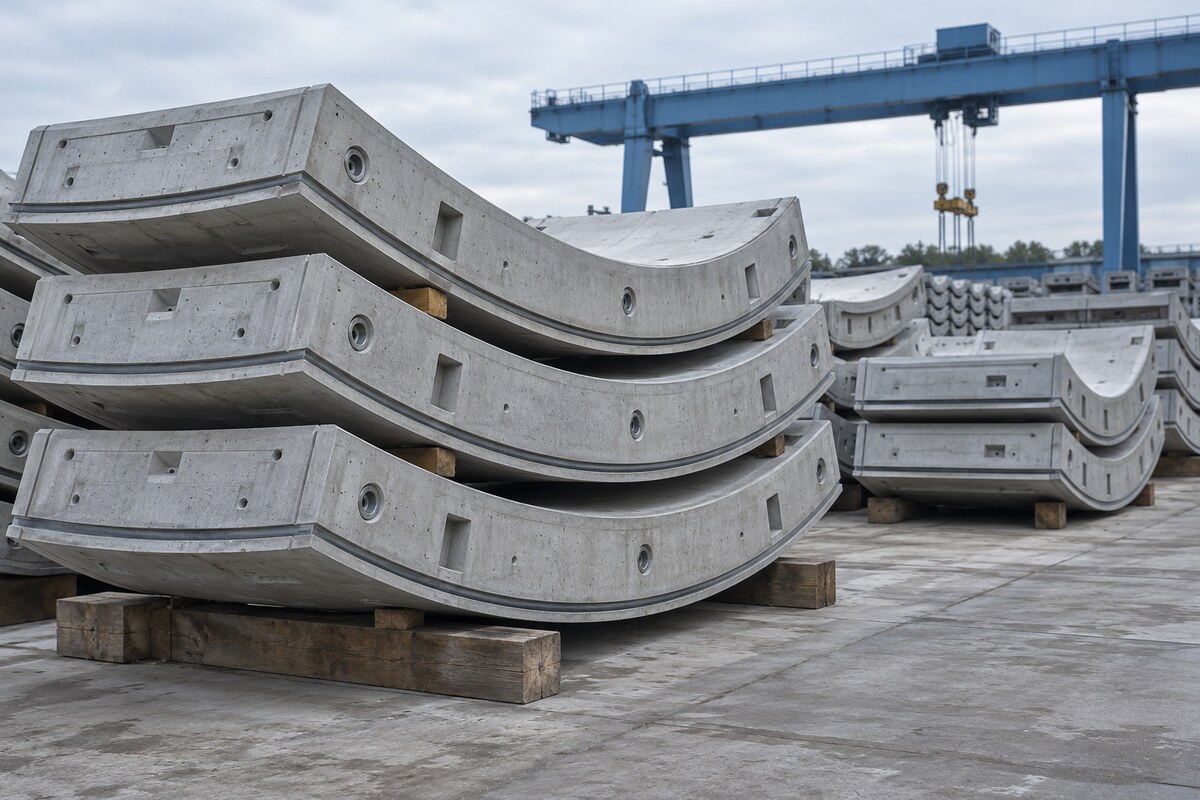
H53 used a different materials-supply arrangement. ÖBB Rail Cargo Group organised a programme covering 570,000 tonnes: 530,000 tonnes of precast lining elements and 40,000 tonnes of pearl gravel. Max Bögl manufactured the elements at Sengenthal in Germany, about 365 kilometres by rail from Steinach am Brenner. The Wolf siding, operating since 2016, allowed deliveries directly to the construction site. Gantry cranes unloaded the trains, after which heavy goods vehicles carried the lining elements to the tunnel boring machines.
Each lining ring comprised six segments and an invert element. A standard segment weighed 9.5 tonnes, compared with 10.6 tonnes for the invert element. The ring length was 1.95 metres and the segment thickness 40 centimetres. These specifications describe the lining supply for H53, rather than the Ahrental factory’s production. The Rail Cargo logistics account accompanied a February 27, 2025, site event where journalists observed a train unloading and visited the underground works.

Lilia completes the eastern H41 drive
Lilia broke through in Navis at approximately 12:40 on October 6, 2025. The east main tunnel machine had started from Ahrental in May 2023 and excavated 8.1 kilometres. It reached the area of the previously constructed Iris bypass towards the adjoining H53 lot, following Ida’s arrival in the western bore. Lilia was approximately 160 metres long and weighed 2,420 tonnes. Its journey also passed through complex geological zones along the route through the mountain.
The October breakthrough ended mechanised excavation in H41. Combined with the previously completed conventional drives, it brought the lot’s main-tunnel excavation works to a close. BBT SE and ARGE H41 marked the achievement with the miners. Of the nine tunnel boring machines originally deployed across the project, only Wilma and Olga remained active in neighbouring H53 at that date. This October fleet position records machines still excavating then, rather than the cumulative equipment supplied over the project’s lifetime.
From excavation milestones to railway equipment
The H41 completion ceremony followed on November 11, 2025, at the Ahrental lining factory. Tyrolean transport councillor René Zumtobel attended with BBT SE’s management and construction companies. Approximately 90 per cent of excavation across the project had been completed by then. Less than nine kilometres of main tunnels remained to be excavated, all within H53 Pfons-Brenner, where Wilma worked in the western bore and Olga in the eastern bore. These quantities concerned remaining excavation rather than the proportion of a fully equipped railway ready for service.
BBT SE board members Umberto Lebruto and Martin Gradnitzer marked a year that included Flavia’s completion, the first cross-border exploratory connection and the arrivals of Ida and Lilia. Further construction and railway-equipment work remained ahead. Zumtobel referred to a goal of beginning operations in 2032, a future target rather than an achieved opening date. Completion of a main tunnel drive, completion of its lining and preparation for railway operation remain separate milestones in this sequence of underground construction.







Leave a comment